




Jeep Wrangler JL Catch Can: Benefits, Installation, and What to Expect This Summer
Posted by JLOSC on 2026 Sep 18th
Summary
A Jeep Wrangler JL catch can adds another stage of oil separation to the 3.6L Pentastar's PCV system, helping capture oil carried with crankcase vapor before it reaches the intake. For 2018–2026 Wrangler JL and 2020–2026 Gladiator 3.6L owners, J&L's direct-fit Oil Separator 3.0 uses vehicle-specific mounting hardware and OEM-style quick-connect fittings. Here's what to know about installation, first-service expectations, summer trail use, and maintenance.
Table of Contents
- How the 3.6L Pentastar PCV system works
- Off-road driving and steep angles
- How to install a catch can
- What to expect after installation
- Maintenance and seasonal considerations
- Warranty and emissions
- Key Takeaways
- FAQs
- Conclusion
How Does the 3.6L Pentastar PCV System Work?
All internal-combustion engines produce some blow-by as combustion gases pass the piston rings and enter the crankcase. The positive crankcase ventilation system routes those gases back to the intake rather than letting pressure build. Crankcase vapor can carry suspended oil, and some can continue through the PCV line and leave residue in the intake tract.
Why Add an Oil Separator?
The J&L Oil Separator 3.0 installs in that PCV circuit and gives suspended oil droplets a place to collect before the remaining vapor continues toward the intake. J&L lists the current kit for 2018–2026 Jeep Wrangler JL 3.6L models and 2020–2026 Jeep Gladiator 3.6L models. The standard canister holds 3 ounces and uses OEM-style quick-connect fittings with vehicle-specific hardware.
For owners researching a Jeep Gladiator oil catch can, this is the same direct-fit 3.6L application used for the listed Wrangler JL models.
What Changes During Off-Road Driving?
Off-road use can mean sustained load, low-speed driving, and steep vehicle angles. Those conditions make it important to separate blow-by from oil movement.
Do Steep Trail Angles Increase Blow-By?
A steep vehicle angle does not automatically create additional blow-by. Blow-by varies with combustion pressure, engine condition, load, and other factors. Vehicle angle can, however, change where liquid oil moves inside the engine.
A Wrangler JL catch can can capture oil mist that enters the PCV circuit where the separator is installed. It should not be treated as a guaranteed fix for smoke or abnormal oil consumption during extreme-angle operation. Persistent symptoms deserve separate diagnosis.
How to Install an Oil Catch Can on a Jeep Wrangler JL 3.6L
J&L's kit is designed for direct-fit installation, so you don't need to fabricate a bracket or create custom hose routing. The current J&L installation instructions call for a Phillips screwdriver, 10mm socket, and ratchet. Start with a cool engine and keep the original PCV hose in case the Jeep is ever returned to stock.
Step-by-Step Installation
- Remove the engine cover. Remove the two 10mm bolts at the front, then lift the cover and pull it forward.
- Remove the factory PCV hose. Locate the hose running from the rear of the passenger-side valve cover toward the driver side of the intake manifold. Carefully release the quick-connect fitting and remove the hose.
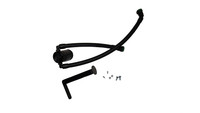
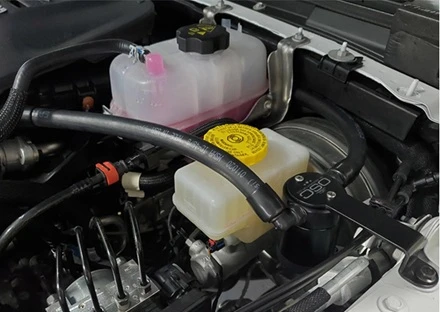
- Mount the separator. Position the supplied bracket at the existing threaded location on the driver side. Secure it with the supplied bolt, then attach the separator with the included hardware.
- Route the longer hose. Remove the two 10mm nuts holding the coolant overflow tank and lift the tank enough to route the hose behind it. Connect the hose to the PCV fitting at the rear of the valve cover, then reinstall the tank.
- Connect the intake-side hose. Route the second hose beneath the coolant line and connect it to the intake-manifold PCV fitting. Keep both hoses free of kinks.
- Check the installation. Confirm both quick-connect fittings are seated, make sure the hoses are clear of hot or sharp components, and reinstall the engine cover. No ECU tuning is required.
Quick tip: Give each connection a gentle pull before closing the hood. If the Jeep runs differently afterward, inspect the fittings and hose routing first.
What Should You Expect in the First 500 to 1,000 Miles?
J&L recommends checking the reservoir after the first 500 to 1,000 miles to establish a baseline. Its general guidance says many applications average around one ounce per 1,000 miles, but driving style, climate, engine condition, and oil level can all affect collection.
What Should the Collected Fluid Look Like?
Collection varies from Jeep to Jeep. In colder weather, oil may also mix with condensation and create a lighter or milkier-looking fluid.
The standard reservoir holds 3 ounces, while J&L's compatible extension increases total capacity to 6 ounces. The first few inspections will tell you more about your Jeep's maintenance needs than a generic collection estimate.
How Often Should You Drain a Wrangler JL Catch Can?
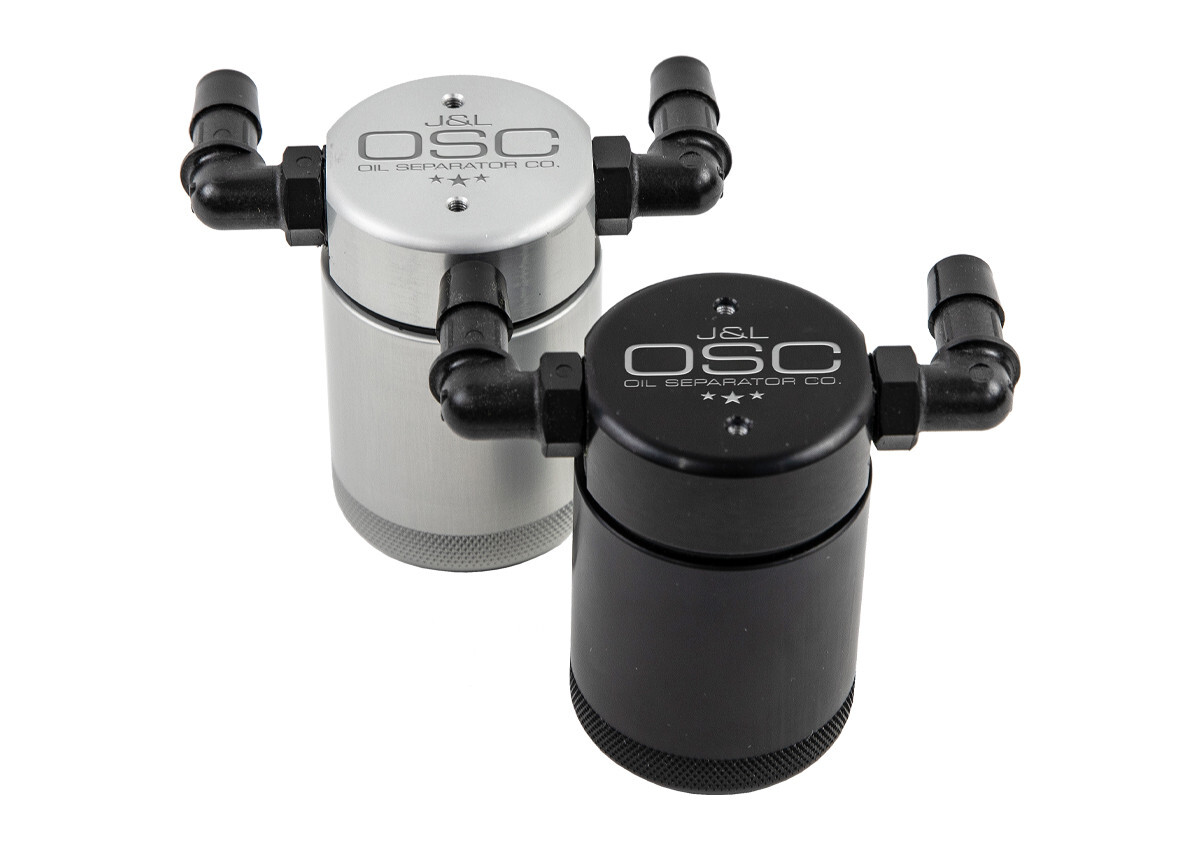
J&L recommends draining the standard reservoir about every 2,000 to 3,000 miles, but use that as a starting point after the first inspection. The goal is to learn how quickly your engine fills the can and service it before it approaches capacity.
Highway, Trail, and Towing Use
Owners who tow or spend weekends off-road should inspect the can after those different use patterns until they know how the vehicle responds.
Tip: Empty the separator before a long road trip, towing weekend, or trail trip, then inspect it afterward. That gives you a useful comparison with normal daily driving.
How Can Summer and Cold Weather Affect Maintenance?
Summer heat alone does not mean the separator will fill faster. Long trips, towing, and extended low-speed trail use can change the vehicle's operating pattern.
Summer Driving Expectations
Check the reservoir before and after demanding trips rather than assuming one interval works year-round. Do not expect a horsepower increase or fuel-economy jump after installation. The separator's job is to reduce the amount of oil carried through the PCV line into the intake path.
For a closer look at early collection and longer-term ownership, read our guide on what to expect after installing an oil separator.
Cold Weather and Condensation
Warm crankcase vapor entering a cold aluminum canister can create more condensate, so J&L recommends more frequent checks in cold climates. Never pour the collected mixture back into the engine because it can contain oil, water, fuel residue, and other contaminants.
Warranty and Emissions Considerations
Installing an aftermarket part does not automatically cancel an entire vehicle warranty. The Federal Trade Commission explains that aftermarket parts can be used without automatically losing warranty coverage. A manufacturer or dealer may deny damage coverage it can show was caused by a defective aftermarket part or improper installation.
Keep the Factory PCV Hose
Keep the original hose so you can restore the factory PCV routing if needed. For more on dealership service and aftermarket parts, see our oil separator warranty guide.
Check Local Emissions Requirements
J&L currently lists this product as not CARB-exempt and not legal for sale or use in California or other jurisdictions requiring a California Executive Order for the application. CARB explains that exempt aftermarket parts receive an Executive Order after engineering evaluation showing that the modification does not increase vehicle emissions.
Key Takeaways
- J&L's current kit fits 2018–2026 Wrangler JL 3.6L and 2020–2026 Gladiator 3.6L models.
- The separator captures oil carried through the PCV circuit before it continues toward the intake.
- Steep trail angles can affect oil movement, but they shouldn't automatically create more blow-by.
- Check the reservoir after the first 500 to 1,000 miles and base later service on actual collection.
- Summer trail use, towing, and long trips are good reasons for an extra inspection.
- Cold weather can increase condensate inside the reservoir.
Frequently Asked Questions
1. What Should I Check If the Jeep Runs Differently After Installation?
Start with both PCV connections and the hose routing. Make sure the quick-connect fittings are fully seated and neither hose is pinched or kinked.
2. Does the Wrangler JL or Gladiator Need an Oil Separator on Both PCV Sides?
J&L says most naturally aspirated applications only need a separator on the PCV, or "dirty," side. The 3069D kit is designed for the PCV(dirty) installation on the listed 3.6L Wrangler JL and Gladiator applications.
3. How Often Should the Separator Be Cleaned?
The current installation instructions for this Jeep-specific kit recommend cleaning the internal filter every 10,000 miles. J&L advises spraying an appropriate degreaser or solvent through the filter and letting it air-dry before reassembly.
Conclusion: What a Catch Can Adds to a JL or JT
A Jeep JL catch can gives oil carried through the PCV system somewhere to collect before that residue continues toward the intake. The direct-fit installation keeps the job approachable, while early inspections let each owner establish a service schedule based on how the Jeep is actually driven.
If summer means towing, road trips, or more trail time, check the reservoir before and after harder use. Your own collection rate is more useful than a universal mileage estimate.
Add a Direct-Fit Oil Separator to Your Wrangler JL or Gladiator
The J&L Oil Separator 3.0 is designed for 2018–2026 Jeep Wrangler JL 3.6L and 2020–2026 Jeep Gladiator 3.6L applications with vehicle-specific hardware and OEM-style PCV connections.
Shop the J&L Jeep Gladiator oil catch can and confirm current fitment and installation details for your Jeep before ordering. Call now!
