



Sierra 2500/3500 Oil Catch Can: Installation, Maintenance & What to Expect
Posted by JLOSC on 2026 Apr 15th
Summary
The 6.6L gas L8T in the GMC Sierra 2500 and 3500 is built to work, especially under load. That same workload also increases crankcase vapor, which means more oil mist moving back through the PCV system and into the intake tract. Over time, that can leave residue where you do not want it.
A catch can is a simple way to intercept that vapor before it reaches the intake. This guide covers how the Sierra 2500 PCV system works, what the Sierra 2500 catch can installation actually involves, what you should expect in the first 500 to 1,000 miles, and how maintenance changes if the truck sees regular towing or cold-weather use.
Table of Contents
- How Does the Sierra 2500 6.6L Gas (L8T) PCV System Work, and Why Does It Matter?
- How Do You Install a Sierra 2500 Oil Catch Can (Tools, Mounting, and Hose Routing)?
- What Should You Expect in the First 500 to 1,000 Miles After Installing a Catch Can?
- How Often Should You Drain and Maintain a Sierra 2500 Catch Can (Daily Driving vs Towing)?
- What Changes in Cold Weather, and How Do You Prevent Catch Can Issues?
- Will a Catch Can Affect Warranty or Emissions Compliance?
- What Questions Should You Answer Before Clicking "Add to Cart"?
- Key Takeaways
- FAQs
- Conclusion
How Does the Sierra 2500 6.6L Gas (L8T) PCV System Work, and Why Does It Matter?
Overview of the L8T PCV system
Like any gas engine, the L8T creates blow-by. Some combustion gases slip past the piston rings and enter the crankcase. The PCV system routes those vapors back into the intake, preventing pressure from building up inside the engine.
The problem is what those vapors carry. Oil mist, fuel residue, and moisture move through the system with the air. Over time, that leaves residue in the intake tract.
Why heavy-duty use changes the equation
The GMC Sierra 2500/3500 6.6 gas oil catch can (L8T) conversation matters more once the truck starts doing truck work: towing, hauling, and long pulls all raise cylinder pressure. Higher pressure usually means more blow-by. More blow-by means more vapor moving through the PCV system.
That’s why an oil catch can for towing makes practical sense on this platform. It is about keeping more of that contamination out of the intake when the engine is under real load.
How Do You Install a Sierra 2500 Oil Catch Can (Tools, Mounting, and Hose Routing)?
What you need before you start
Most kits for this application are straightforward. You are usually looking at:
- a basic socket set
- a clean rag
- 15 to 30 minutes
- a vehicle-specific kit with a bracket and hoses
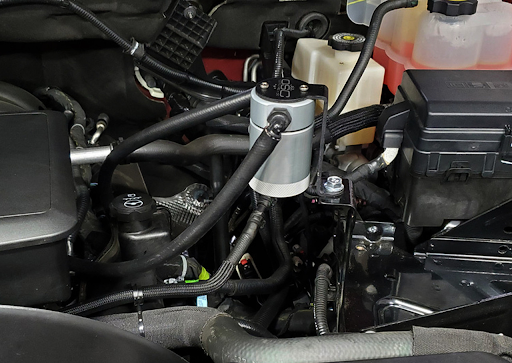
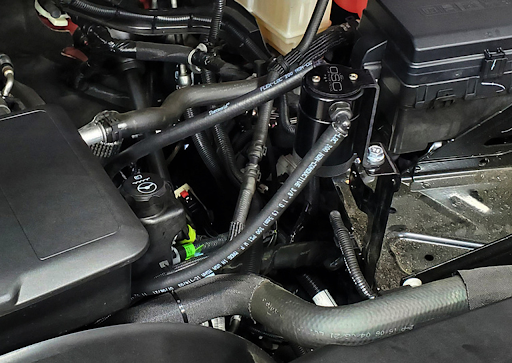
A proper Sierra 2500 catch can installation should not require cutting factory lines or improvising hose routing.
Basic installation flow
The exact bracket location depends on the kit, but the process is usually simple:
- Locate the factory PCV line & remove it
- Mount the bracket at the designated location.
- Route the hose from the valve cover to the catch can inlet.
- Route the hose from the outlet back to the intake side of the PCV path.
- Confirm all fittings are fully seated.
- Start the truck and check for leaks.
What matters most during install
The big things are fitment and clean routing. Hoses should sit naturally, without kinking, rubbing, or stretching. Fittings should click into place. If the kit is made correctly for the platform, the install should feel like a clean bolt-on, not a workaround.
What Should You Expect in the First 500 to 1,000 Miles After Installing a Catch Can?
What an early collection usually looks like
Your first inspection tells you what your truck is actually pushing through the system. After 500 to 1,000 miles, it is normal to see a small amount of dark oil, or a milky mix if moisture is present.
That is one of the clearest oil catch can results you can get. The fluid in the can is fluid that did not continue into the intake.
What you should not expect
You should not expect a dramatic seat-of-the-pants power jump. A catch can is a preservation part. The benefit is cleaner intake plumbing, less residue over time, and better long-term consistency.
Read on: What to Expect After Installing a J&L Oil Separator
How Often Should You Drain and Maintain a Sierra 2500/3500 Catch Can (Daily Driving vs Towing)?
Daily driving intervals
For a daily-driven truck that sees normal commuting and lighter duty, many owners can check and drain the can around oil-change intervals. That usually means every 3,000 to 5,000 miles, depending on what your first few inspections show.
Towing and heavy-use intervals
If the truck regularly tows, especially in hot weather or under sustained load, check it sooner. Heavy use increases blow-by, and that usually means faster collection. In that case, a more realistic catch can maintenance schedule may be every 1,000 to 2,500 miles until you learn the truck's pattern.
What "maintenance" really means
This is not a high-effort part to own. You are draining the can, checking the fittings, and occasionally cleaning the canister if needed. That is the whole job.
What Changes in Cold Weather, and How Do You Prevent Catch Can Issues?
Why winter changes collection
Cold weather adds condensation. When warm vapor hits a cold canister, moisture collects faster. That is why winter contents often look thinner, cloudier, or more milky than what you see in warm months.
How to stay ahead of it
In freezing weather, shorten your inspection interval. A can that might be fine for longer in summer may need to be checked every 500 to 1,000 miles in winter, especially on short trips.
If your driving pattern is mostly short-distance cold starts, this matters even more. Moisture builds faster when the engine does not stay hot long enough to burn it off.
Will a Catch Can Affect Warranty or Emissions Compliance?
Warranty concerns
This is one of the most common buyer hesitations. A properly designed, closed-loop catch can does not tune the engine or rewrite factory logic. It filters vapor already moving through the PCV system.
That said, buyers should always use a kit designed for the truck, install it correctly, and keep the factory parts. A clean, reversible setup is easier to live with than a hacked-in universal system.
Emissions considerations
This is where buyers should be practical and read the product details. A closed-loop system differs from an open-vent setup. If emissions compliance is a major concern in your state or inspection environment, check the product language carefully before buying.
What Questions Should You Answer Before Clicking "Add to Cart"?
How hard do you actually use the truck?
If the truck is a commuter that occasionally hauls, your maintenance needs will be lighter than those of someone who regularly tows. If it works hard, this upgrade makes more sense, and the service interval will probably be shorter.
Are you comfortable with basic upkeep?
This is not a difficult part to live with, but it is still a maintenance item. If you are not going to check it, drain it, or pay attention in winter, you are better off knowing that before you buy.
Are your expectations realistic?
A Sierra 2500/3500 oil catch can is a long-game part. It helps keep the intake side cleaner over time. It supports consistency. It does not turn the truck into something it is not.
Key Takeaways
- The Sierra 2500 PCV system routes blow-by vapors back into the intake.
- Heavy load and towing usually increase blow-by on the 6.6L gas L8T.
- A vehicle-specific Sierra 2500 catch can installation should be quick and clean.
- Your first 500 to 1,000 miles will help establish a realistic maintenance baseline.
- Towing and cold weather both shorten the ideal maintenance schedule for catch cans.
- A catch can is a preservation upgrade, not a horsepower mod.
Frequently asked questions
1. Does the Sierra 2500 6.6 gas L8T really benefit from a catch can?
Yes. The truck's workload and PCV routing make it a good candidate, especially if it tows or sees regular heavy use.
2. How much fluid should I expect to collect early on?
It varies by climate, driving habits, and load. The first 500 to 1,000 miles usually show enough to establish a baseline.
3. Is this the same as a Silverado 2500/3500 setup?
The application is closely related, and buyers often cross-shop the Silverado 2500 oil catch can and Chevy Silverado 3500 oil separator options alongside the Sierra fitment. The key is buying the correct platform-specific kit.
4. Can I ignore it once it is installed?
No. It is a low-maintenance part, not a no-maintenance part. You still need to inspect and drain it on a schedule that matches how the truck is used.
Conclusion
If your Sierra 2500/3500 spends its life doing real work or just hauling the family around, the PCV system is moving more than clean air. A catch can gives that vapor somewhere else to go before it leaves the intake, preventing residue buildup. The install is usually simple, the upkeep is manageable, and the value shows up over time in cleanliness and consistency.
If you are ready to compare a Sierra 2500 oil catch can setup built for the 6.6L gas platform, start with the J&L product page and make sure the fitment matches your truck.
