



Protect Your Warranty: How a J&L Oil Separator Keeps You Covered
Posted by JLOSC on 2025 Dec 23rd
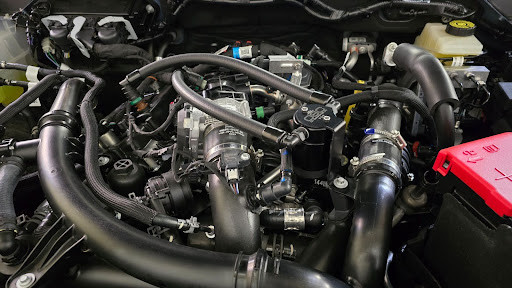
New trucks and performance cars leave the factory with a clean intake and sealed PCV system. As mileage builds, blow-by sends oil mist and fuel vapors back through the intake, slowly dragging performance down. An oil separator for vehicle protection is a simple way to control that buildup, but many owners hesitate due to warranty and emissions rules.
A J&L Oil Separator is built around those concerns. Each kit is closed-loop, uses OEM-style hardware, and most can be removed without cutting anything. The goal is to give the engine the extra protection of a J&L oil catch can while staying in line with factory coverage and inspection standards.
Will installing an oil separator void my truck warranty?
Modern warranty law focuses on cause, not on the presence of aftermarket parts. A manufacturer must show that a specific part caused a specific failure before it can deny coverage for that repair. Simply seeing an oil separator for truck or car applications under the hood is not enough.
If a problem can be traced to a damaged or poorly installed part, the manufacturer can push back on that portion of the claim. That is why quality and proper fit matter. A universal can that requires cutting factory hoses or leaves loose connections can create issues. A platform-specific J&L system uses solid brackets, molded or pre-cut hoses, and sealed connections so the PCV system continues to operate in a factory-like way.
How a J&L Oil separator protects engine performance
Gasoline direct-injection engines are sensitive to carbon and oil buildup. Fuel is sprayed directly into the cylinder, so there is no flow over the backs of the valves to help clear away deposits. Blow-by entering through the PCV system can bake onto hot parts and create rough idle, misfires, and loss of power, issues that are often treated as maintenance instead of warranty failures.
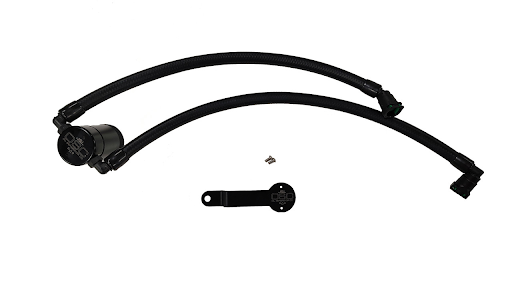
A J&L oil separator for car or truck platforms sits in line with the PCV hose. Blow-by vapors pass through the can, internal media strip out oil droplets, and cleaner air returns to the intake . The collected oil stays in the can until it is drained. Keeping that contamination out of the intake path helps the engine stay closer to its original performance and reduces deposit-related complaints.
Read more: How to Know You're Buying a Quality Oil Separator
Does an OEM-fit oil separator install like factory equipment?
An OEM-fit system matters for reliability and for the appearance of the engine bay when a technician opens the hood. J&L designs each kit around a specific platform. Brackets use existing bolt holes. Hoses follow stock routing and often use factory-style quick-connect ends. The can is machined from billet aluminum and positioned for easy draining.
The result is an oil separator for vehicle protection that fits cleanly and keeps the PCV loop sealed. The system acts as an inline filter, requiring minimal rework, thereby reducing the risk of vacuum leaks and demonstrating that the original layout was respected.
Can I remove an oil separator before service?
Because J&L kits are fully bolt-on, most applications can be removed and returned to stock without cutting or repairing anything. The factory PCV hose can be reinstalled in place of the separator, and the engine bay returns to its original appearance. After service, the J&L components can be reinstalled using the same mounting points and connections.
Do oil separators affect emissions compliance?
Any part that touches crankcase ventilation needs to work with the emissions package. J&L designs its systems as closed-loop components. They do not vent vapors to the atmosphere. The separator removes oil mist from the airflow and sends cleaned vapors back through the intake to be burned, which is how the PCV system is meant to function.
Inspection and emissions rules vary by state and region, so local regulations should always be checked. Functionally, a properly installed, closed separator works with the emissions system rather than bypassing it.
Protecting performance without sacrificing coverage
A J&L oil separator for truck or car platforms gives the PCV system a clean, OEM-style upgrade that helps keep blow-by out of the intake without putting factory coverage at risk. It installs with factory-style hardware, stays inside the closed PCV loop, and can be removed if a return to stock is ever needed. For drivers who want to protect performance and their warranty at the same time, choosing a J&L Oil Separator kit and having it installed correctly is a simple, concrete step that pays off every mile.
Important note
Warranty coverage can be interrupted differently from dealership to dealership and service writer to service writer. Our information here is generalized, if you have specific questions about what is and what isn’t covered under your vehicle's warranty, you should contact your local service department prior to installation of ANY aftermarket parts for your vehicle. Alternatively, if you remove the aftermarket parts prior to service or warranty work, this could save a future headache on dealing with a problem dealer.
Frequently asked questions
1) Does a J&L oil separator add horsepower?
No. Its job is to help prevent gradual power loss from oil and carbon buildup in the intake and on the valves.
2) How often should they be emptied?
Collection rates vary by engine and driving style. Many owners start by checking the can every 1,000 miles, then move to a schedule that usually lines up with oil changes.
3) Does a J&L system require a tune?
No. The separator does not change airflow readings or air-fuel targets and is designed to work with the stock calibration.
4) Can a universal catch can do the same job?
A universal can may catch some oil, but it often requires cutting hoses or improvising mounts. That can create leaks. A vehicle-specific J&L kit is designed to fit cleanly and keep the PCV system sealed.
5) Can an oil separator fix existing carbon buildup?
No. It is a preventive part. It slows or limits new deposits after installation.
