



2025-2026 Ram 1500 Oil Catch Can Installation: What to Expect Before You Buy for the 3.0 Hurricane Engine
Posted by JLOSC on 2026 Jun 12th

Summary
A 2025-2026 Ram 1500 oil catch can installation is usually a manageable job for a careful DIY owner. The J&L Oil Separator 3.0 is a direct-fit kit for the 2025-2026 Ram 1500 3.0L SHO/RHO, 2022-2025 Jeep Wagoneer 3.0L, and 2022-2026 Jeep Grand Wagoneer 3.0L. It uses OEM-style quick-connect PCV fittings, includes application-specific hardware, and does not require cutting, custom hose routing, or ECU tuning.
This guide explains what to expect before buying a 2025 Ram 1500 oil catch can, including tools, install time, fitment, common concerns, and first-service expectations.
Table of Contents
- Why Install an Oil Catch Can on the 3.0 Hurricane?
- What Comes With the Ram 1500 Oil Catch Can Kit?
- 2025+ Ram 1500 Oil Catch Can Installation Overview
- Common Installation Concerns
- What to Expect After Installation
- Key Takeaways
- Conclusion
- FAQs
Why Install an Oil Catch Can on the 3.0 Hurricane?
The 3.0 Hurricane engine uses a PCV system to route crankcase vapors back into the intake. Those vapors can carry oil mist, moisture, and other byproducts. An oil catch can sits inline with that PCV path and collects oil vapor before it continues through the intake tract.
What the J&L separator does
The J&L Oil Separator 3.0 uses a fine-mesh stainless steel filter to convert oil vapor into liquid. That collected fluid stays in the canister, while cleaner air continues through the PCV system. The goal is not an instant power increase. The goal is long-term intake cleanliness and better control over the oil mist that would otherwise keep circulating through the intake.
Fitment for Ram and Jeep 3.0L applications
This kit fits the 2025-2026 Ram 1500 3.0L SHO/RHO, 2022-2025 Jeep Wagoneer 3.0L, and 2022-2026 Jeep Grand Wagoneer 3.0L. Some buyers may search for a 2022 Jeep Wagoneer oil filter when comparing oil-system parts for this platform, but this product is an oil separator, also called a catch can. It is not an engine oil filter.
What Comes With the Ram 1500 Oil Catch Can Kit?
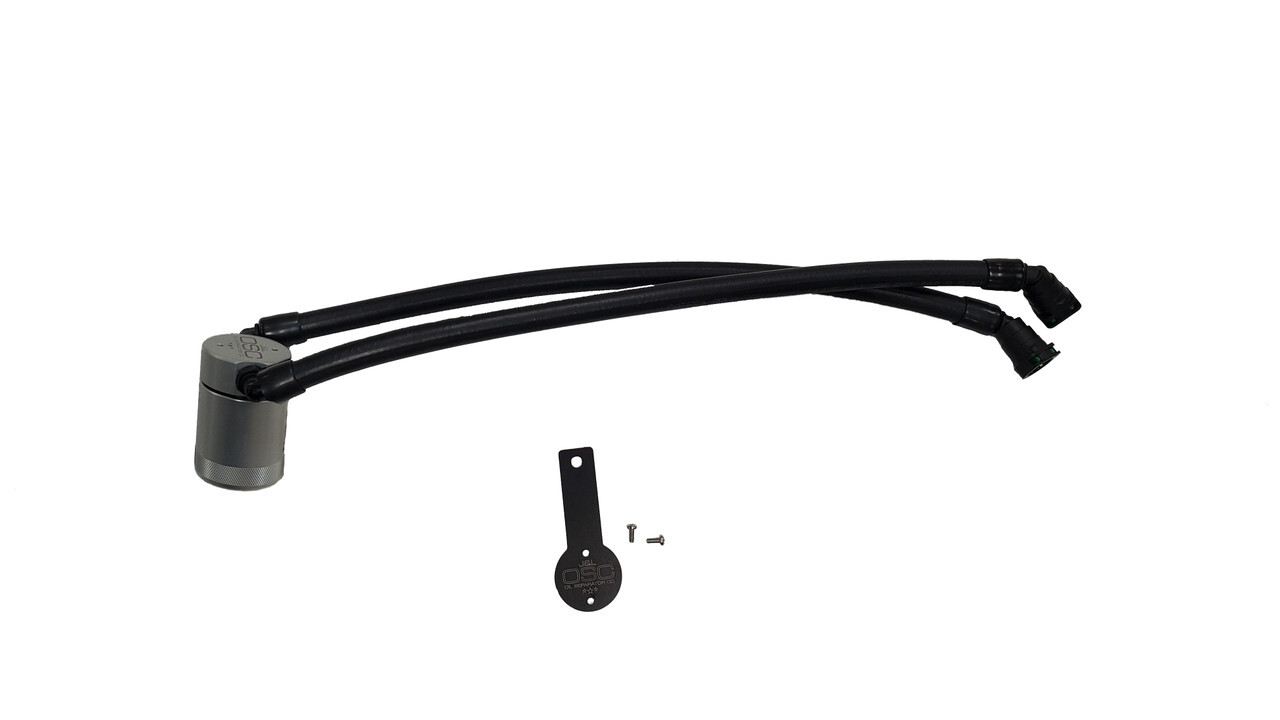
A vehicle-specific Ram 1500 oil catch can kit should remove the guesswork that comes with universal parts. The J&L kit is built around the 3.0L engine layout, so the install does not require bracket fabrication, cutting factory hoses, or testing different hose lengths.
Included parts and hardware
The kit includes the separator assembly, application-specific hoses, OEM-style quick-connect fittings, and mounting hardware. The canister has a removable lower reservoir for draining collected fluid during regular service. The kit comes fully assembled, so you don’t need to worry about installing fittings, cutting hoses and stressing about leaks.
Tools to have ready
For installation, have a ratchet, socket extension, 1/2-inch socket, 5/8-inch socket, and Phillips-head screwdriver ready. A clean rag is also useful for wiping fittings and checking the work area after the install.
Tip: Lay out the tools before starting. The job is simple, but stopping halfway through to find a socket or screwdriver can make the install take longer than it should.
2025 Ram 1500 Oil Catch Can Installation Overview
The 2025 Ram 1500 oil catch can installation is mostly about mounting the separator, removing the factory PCV connection, routing the supplied hoses, and confirming that each quick-connect fitting is seated. There is no wiring or tuning required.
Step 1: Start with a cool engine
Let the engine cool before working around the PCV connections. Identify the factory hose route and compare it with the supplied J&L lines before disconnecting anything.
Step 2: Assemble and mount the separator
Remove the factory engine cover. Assemble the separator and bracket outside the engine bay, then mount it using the kit’s application-specific location. A secure mount keeps the can stable and makes future draining easier.
Step 3: Connect the PCV lines
Release the factory PCV fitting carefully. Do not yank on the hose or remove clips from the fitting. Route the supplied J&L lines without kinks, then connect the filtered side to the PCV or dirty side, and the open port toward the intake.
Step 4: Check every fitting
Each quick-connect fitting should lock in place. Once checked, reinstall the engine cover. Before closing the hood, confirm the hoses are not pinched, twisted, or rubbing against anything sharp or hot. This final check is the simplest way to avoid most leak or warning-light concerns.
We have a great installation video showing this entire process for you to follow along with.
Common Installation Concerns
Most hesitation comes from two questions: whether the can will leak and whether it will cause a check engine light. With a vehicle-specific kit, both concerns usually come down to correct installation.
1. Will the catch can leak?
A leak is usually caused by a loose fitting, a damaged seal, poor hose routing, or an improperly seated connection. The J&L kit uses sealed quick-connect fittings and a planned mounting location, which helps reduce those risks. After installation, start the truck and inspect the connection points.
2. Will it cause a check engine light?
A properly installed J&L Oil Separator should not require a tune or an engine calibration change. It works within the PCV system. If a light appears after installation, the first thing to inspect is whether every fitting is fully locked into place.
3. Is it legal everywhere?
This product is not CARB exempt. It is not for legal sale or use in California or in states that require a California Air Resources Board Executive Order number for this type of part.
What to Expect After Installation
A catch can is a preventive maintenance part. After installation, do not expect a dramatic seat-of-the-pants change. The visible change is that collected oil and moisture now drain from the can instead of continuing through the intake path.
1. First service check
J&L recommends checking the separator after 1,000 miles to determine your vehicle’s collection rate. The amount collected can vary based on driving habits, weather, trip length, engine condition, and workload.
2. Ongoing service
J&L notes that many applications can go 2,500 to 3,500 miles before the unit needs to be emptied, but every vehicle is different. Cold weather and short-trip driving can increase condensation, so check more often in winter. Drain the collected fluid into an appropriate container and dispose of it the same way you would dispose of oil. Do not pour it back into the engine.
For owners who want fewer drain intervals, the J&L 3.0 can be extended to increase capacity from 3 ounces to 6 ounces with the optional extension.
For a broader look at stock-engine use cases, read J&L’s guide on the signs you may need an oil separator even if your car is stock.
Key Takeaways
- The 2025 Ram 1500 oil catch can from J&L is a direct-fit kit for the 3.0L Hurricane application.
- Fitment includes the 2025-2026 Ram 1500 3.0L SHO/RHO, 2022-2025 Jeep Wagoneer 3.0L, and 2022-2026 Jeep Grand Wagoneer 3.0L.
- The kit uses OEM-style quick-connect PCV fittings and does not require cutting, fabrication, or ECU tuning.
- Proper hose routing and fully seated fittings are the main keys to avoiding leaks or warning lights.
- Check the can after the first 1,000 miles, then set your drain interval based on the actual collection rate.
- The best oil catch can for 2025 Ram 1500 owners is usually the one that fits the engine correctly and is easy to service.
Frequently asked questions
1. Is the J&L kit a direct-fit oil catch can for the 2025 Ram 1500?
Yes. It is designed for the 2025-2026 Ram 1500 3.0L SHO/RHO and uses application-specific hoses, mounting, and OEM-style quick-connect PCV fittings.
2. Does the kit require a tune?
No. The J&L Oil Separator works within the PCV system and does not require ECU tuning when installed correctly.
3. What is the most common installation mistake?
The most common issue is not fully seating a quick-connect fitting. Each fitting should lock into place, and hose routing should be checked before driving.
4. How often should the catch can be emptied?
Check it after the first 1,000 miles. After that, the service interval depends on the collection rate, weather, trip length, and driving conditions.
5. Is this the same as a 2022 Jeep Wagoneer oil filter?
No. It is an oil separator, not an engine oil filter. The keyword often appears in related searches, but this product is designed for PCV vapor separation.
6. Can the kit be removed later?
Yes. Because it uses the factory connection points, the original PCV hose can be reinstalled later if needed.
7. Is this catch can legal in California?
No. This product is not CARB-exempt and is not for sale or use in California or other states requiring a CARB Executive Order number.
Conclusion
A 2025 Ram 1500 oil catch can installation does not have to be a complicated project. With a direct-fit kit, the job comes down to mounting the separator, connecting the supplied PCV lines, and confirming each fitting is fully seated. The J&L Oil Separator 3.0 gives Ram and Wagoneer owners a clean, reversible way to manage oil vapor without custom routing or tuning.
Explore the J&L Oil Separator 3.0 for the 2022-2025 Jeep Wagoneer 3.0L, 2022-2026 Jeep Grand Wagoneer 3.0L, and 2025-2026 Ram 1500 3.0L SHO/RHO to confirm fitment, finish options, and product details before you buy.
