






2020–2026 Ford Explorer 3.0 EcoBoost Catch Can Benefits This Summer
Posted by JLOSC on 2026 Aug 11th

Summary
The 3.0L EcoBoost used in supported 2020–2026 Ford Explorer models combines twin turbochargers with direct fuel injection. Its positive crankcase ventilation system routes blow-by gases back toward the intake, and those gases can carry oil, moisture, and combustion residue.
A J&L oil separator adds a filtration stage to the passenger-side PCV circuit. For Explorer owners preparing for summer road trips, traffic, towing or spirited driving, the benefit is less PCV oil carryover during sustained use.
Table of Contents
- How the Explorer 3.0 EcoBoost PCV system works
- Why direct injection matters
- Summer driving and separator use
- What the J&L separator captures
- Five-year ownership value
- Maintenance and fitment
- Key Takeaways
- Frequently Asked Questions
How the Ford Explorer 3.0 EcoBoost PCV System Works
Every internal-combustion engine produces blow-by as a small amount of combustion gas escapes past the piston rings and enters the crankcase. Those gases can carry a mixture of air, burned and unburned fuel vapors, moisture, and oil mist. In a closed crankcase ventilation system, they are routed back into the intake instead of being vented to the atmosphere. SAE research describes oil mist as a normal part of the blow-by stream that crankcase ventilation systems are designed to manage.
The Flow Changes With Engine Load
Under normal driving and intake vacuum, the PCV or “dirty” side handles most of the crankcase ventilation. J&L identifies this as the side that remains under vacuum or suction during most everyday operation.
During moderate to heavy acceleration, manifold pressure changes and the PCV valve can close. At that point, more crankcase ventilation may move through the clean-side path instead. J&L notes that this becomes more relevant on some turbocharged vehicles during sustained high-load use, including towing.
The Factory System Already Separates Some Oil
The Explorer’s factory crankcase ventilation system is not simply an open hose carrying raw blow-by directly into the intake. The 3.0L application includes an OEM oil-separation component as part of the crankcase ventilation system, which helps remove part of the suspended oil before the gases are recirculated.
Factory oil separation still has to balance oil removal with adequate crankcase airflow and pressure control. Engineering research on closed crankcase ventilation systems shows why some oil mist can remain in the vapor stream even after built-in separation.
Where the J&L Oil Separator Fits In
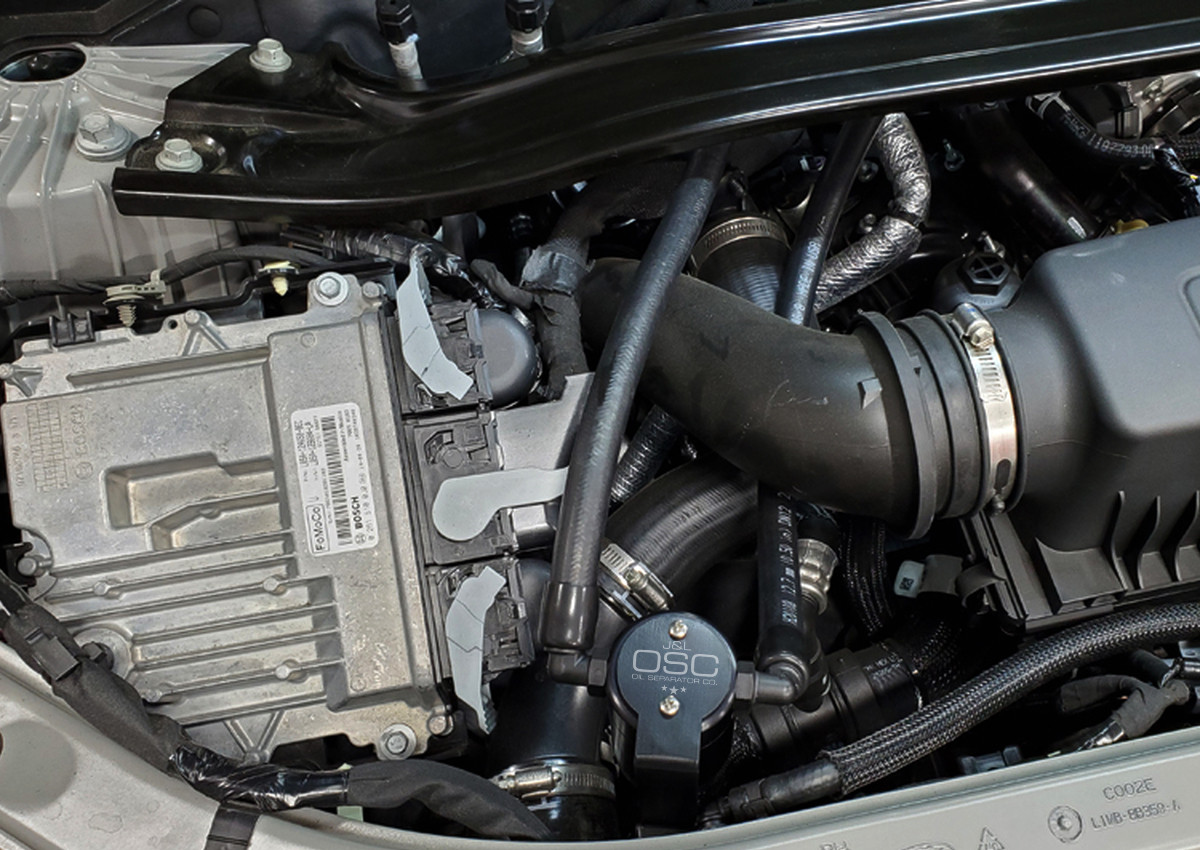
The J&L Oil Separator 3.0 adds another separation stage to the dirty-side PCV circuit. Vapor enters the filtered side of the can, where the internal media helps oil droplets coalesce and collect in the reservoir before the remaining vapor continues toward the intake.
That distinction is important. The J&L unit supplements the factory system rather than replacing it, and this passenger-side separator does not filter every crankcase ventilation path under every operating condition. Its role is to reduce additional oil carryover through the circuit that handles most normal PCV flow.
Why Direct Injection Makes An Oil Separator More Useful
Ford’s EcoBoost design uses direct fuel injection, which sends fuel into the combustion chamber instead of through the intake port.
The Intake Valves Do Not Receive a Fuel Wash
In a port-injected engine, fuel passes across the back of the intake valves. The 3.0L EcoBoost does not receive that same washing effect.
SAE research on gasoline direct-injection engines identifies engine oil, unburned fuel, wear material, and exhaust contaminants as contributors to intake-valve deposits. It also notes that the lack of port-fuel washing allows deposits to accumulate over time.
An oil separator reduces one contributor by capturing oil mist in the filtered PCV circuit. It cannot remove deposits already present, which is why early installation provides the longest window of benefit.
Quick Fact: Fuel-system cleaners do not wash the back of the intake valves in a direct-injection engine the way they can in a port-injected engine.
Deposit Control Is Preventive Maintenance
Substantial intake-valve deposits can contribute to rough operation, hesitation, and other drivability concerns. Mechanical cleaning may be required once buildup is established.
A catch can helps reduce future oil residue before it reaches that point. For more warning signs, read 5 Signs You May Need an Oil Separator Even If Your Car Is Stock.
How Summer Driving Affects the 3.0 EcoBoost
Summer heat does not create blow-by or make an oil separator cool the engine. The seasonal benefit comes from how many Explorer owners use their vehicles.
Road Trips and Towing Mean Sustained Load
Long highway drives, trailer use, repeated passing, and traffic can keep the engine working for extended periods. Installing a separator before summer mileage begins allows it to collect oil throughout those trips.
Summer Use Can Change the Service Interval
An Explorer used locally may not fill the reservoir as quickly as one towing or covering several thousand highway miles. Check it before a long trip and again after returning to establish a practical service interval.
Tip: Drain the reservoir before a towing trip or vacation so you can see how much the Explorer collects under sustained summer use.
What the J&L Oil Separator Does
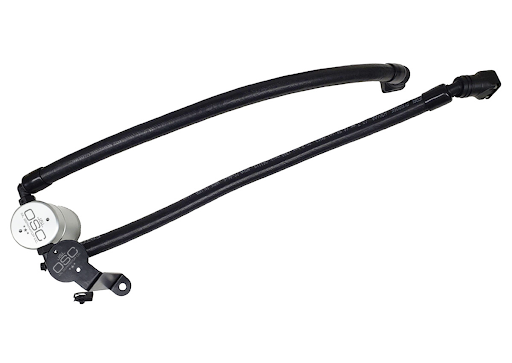
Our J&L Oil Separator 3.0 installs inline and replaces the factory PCV hose. Vapor passes through a stainless-steel mesh filter. Oil droplets condense and fall into the reservoir while the remaining air continues through the closed system.
Direct-Fit Construction
The kit uses OEM-style quick-connect fittings and requires no tuning, cutting, or permanent modification. The body is machined from solid 6061 billet aluminum and holds 3 ounces. A compatible extension increases capacity to 6 ounces.
What It Does Not Replace
The separator does not remove existing deposits or correct engine wear. Collected fluid can contain fuel, moisture, and combustion residue, so do not return it to the engine.
The Five-Year Value of an Explorer Oil Separator
For long-term Explorer owners, the separator’s value builds through continued use.
One Preventive Purchase With Simple Upkeep
Our Explorer 3.0L separator is priced at $169 and does not require a replacement filter at each service. Routine upkeep consists of checking the reservoir, draining the collected fluid, and periodically cleaning the unit.
Less Involved Than Reactive Cleaning
Mechanical intake-valve cleaning requires access to the intake ports and direct removal of established deposits. It involves more labor and equipment than emptying an oil separator. SAE research notes that GDI deposits may require mechanical removal and can form again.
A catch can reduces one known contributor before tens of thousands of additional miles accumulate. For a long-term owner, that is a practical preventive expense.
Early Installation Creates the Longest Benefit
Earlier installation gives the separator more time to collect oil before it enters the intake. Over five years, the ongoing commitment is a few minutes of maintenance every few thousand miles.
Maintenance Intervals and Fitment
The first checks establish the appropriate service interval.
Daily Driving, Towing, and High Mileage
J&L recommends checking the reservoir after the first 500 to 1,000 miles. Most owners can then drain it every 2,000 to 3,000 miles, adjusted according to the collection rate. A more thorough cleaning is recommended around every 15,000 miles.
Owners who tow, spend more time under boost, or cover summer mileage quickly should inspect the can more often.
Supported Explorer Models
J&L lists the 2020–2026 Ford Explorer ST oil separator for supported Explorer ST and Explorer Platinum models equipped with the 3.0L EcoBoost. The product page also lists supported 2020–2026 Lincoln Aviator 3.0L EcoBoost applications. Verify the year, trim, and engine before ordering.
Key Takeaways
- The Explorer 3.0 EcoBoost uses twin turbochargers, direct injection, and a closed PCV system.
- Blow-by gases can carry oil and other contaminants toward the intake.
- Direct injection does not wash the backs of the intake valves with fuel.
- A passenger-side separator reduces oil carryover through the circuit where it is installed.
- Summer towing and road trips may require more frequent reservoir checks.
- Early installation provides the longest period of preventive benefit.
Conclusion
The main summer benefit of a catch can on the 2020–2026 Ford Explorer 3.0 EcoBoost is consistent oil collection when many owners drive farther and tow more often.
Our passenger-side separator gives that oil a place to collect before it continues toward the intake. The installation is direct-fit, and routine maintenance takes only a few minutes.
Frequently Asked Questions
1. Is an Oil Catch Can for a Ford Explorer Worth It?
It makes the most sense for owners who plan to keep their 3.0L EcoBoost for several years, tow regularly, or want to reduce PCV oil carryover before mileage accumulates.
2. Does the Explorer 3.0 EcoBoost Need a Catch Can Only in Summer?
No. The separator works year-round. Summer makes it especially relevant because road trips, towing, and heavier use can increase mileage under load.
3. Can an Oil Separator Remove Existing Carbon Buildup?
No. It reduces new oil carryover after installation. Existing deposits require separate cleaning when necessary.
4. How Often Should I Drain the Separator?
Check it after the first 500 to 1,000 miles. Most owners can then use a 2,000-to-3,000-mile interval, adjusted for collection rate and driving conditions.
5. Does the Kit Fit Every 2020–2026 Ford Explorer?
No. This product is for supported Explorer models equipped with the 3.0L EcoBoost. Verify the year, trim, and engine before ordering.
6. Will an Oil Separator Void the Vehicle Warranty?
An aftermarket part does not automatically cancel the entire warranty. Coverage may be denied for a specific repair if the aftermarket part or its installation caused the failure. The FTC explains that warranty terms generally cannot require consumers to use only branded parts or service unless those items are provided free or the warrantor receives an FTC waiver.
Add Oil Separation Before Summer Mileage Builds Up
Our 2020–2026 Ford Explorer 3.0L EcoBoost oil separator includes OEM-style connections, a 3-ounce billet-aluminum reservoir, vehicle-specific hardware, and a limited lifetime warranty.
Review the fitment table, finish options, installation instructions, extension compatibility, and emissions restrictions before ordering. Call now!
